

back to Psalms
Introduction
The Psalms, penned by at least 8 different people over many generations, are essentially worship song lyrics or hymnals. They cover the span of human emotions in relation to God, and are generally divided into five “books”: 1-41, 42-72, 73-89, 90-106, and 107-150. But the New Testament seems to indicate that they also contain some prophecy, the primary topic of which is the Messiah and his coming kingdom.
Book 2 General Intro
The Psalms of the second book were written by the descendants of Korah 42, 44-49, Asaph 50, David 51-65, 68-70, and Solomon 72, but the rest are anonymous 43, 66-67, 71.
Psalm 42-49
Psalm 42 is a lament familiar to many Christians. Critics of the faith taunt us by asking, “Where is your God?” But again, after lamenting, we should remember verse 5: wait for God, and in time he will vindicate us. Psalm 43 continues the theme of waiting for God’s vindication, and the strong desire to be home with God. How many of us today have this same desire, rather than being attached to this world?
Psalm 44 is a reminder that our battles are not our own but God’s. This hardly means we should do nothing, just as God almost always had the armies of Israel fight battles. But those battles were only won with God’s help, and so it is with our personal battles today. Yet we shouldn’t think that every lost battle is our own fault, because sometimes, as expressed in verse 18, God has other reasons for allowing us to be defeated.
Psalm 45 expresses admiration and respect for the king as God’s representative. But it also applies to God himself as the king of kings, since the writer of Hebrews cites this Psalm and applies it to Jesus. But some commentaries introduce an insidious false teaching in the section about the bride of the king, which starts in verse 10. They cite the creation account in Gen. 2:18 and 22 as the basis for making wives subservient to husbands, yet no such hierarchy is to be found in the cited verses. This was purely a societal tradition in a patriarchal culture, not the mandated will of God. While society only viewed women’s worth in terms of their beauty and bearing children for their husbands, God values women as made in his image Gen. 1:27, and as co-heirs with men 1 Peter 3:7.
Psalm 46 portrays God as like a strong fortress, and Psalm 47 calls all the world to worship him. While the commentary used in these lessons went completely off the rails in Psalm 45, it makes a good point here: that though Israel certainly didn’t exist in a cultural vacuum and had similarities to others, the modern belief that Israel only copied other religions and cultures with mere cosmetic changes is complete nonsense.
Psalm 48 is filled with admiration for the places God chose as his own, and Psalm 49 begins with encouragement to trust in this God. But starting in verse 7 it explains why only God in the flesh could redeem us, and that the fleeting nature of this life will not prevent the high and mighty from being humbled when it’s over. Verses 14-15 reveal that they knew there would be life after death, though they had no detailed understanding of what that would be like.
Psalm 50-70
Psalm 50 is a rebuke from God to Israel for breaking the covenant he had with them. He explains that the sacrifices are not for his need or benefit, since every living thing belongs to him already. He also rebuked those who say the words of worship but practice the deeds of wickedness. Like King David who had to be rebuked by his general for weeping when his army was victorious, Israel showed more love for God’s enemies than for his friends. We all need to pay attention to our own actions and the message they send, which is much louder than our words.
Psalm 51 states plainly that David wrote this in deep remorse after his sin with Bathsheba, which also led to his murder of her husband Uriah. Though his sin was against this godly couple, David admits that the ultimate offense was against God. But though this lament, like most others, is expressed with great exaggeration, some such as the commentary writer take verse 5 as a prooftext for us all being born evil. Yet that belief comes from Gnosticism, not scripture. Besides, David has not mentioned his father, without whom his mother couldn’t have conceived him. It is most unwise to derive Christian doctrine from highly emotional laments. Notice also in verse 11 that David pleads with God not to take the Holy Spirit from him; this shows that before Pentecost, no one was guaranteed the Holy Spirit for life as we are in the age of grace. At least the commentary gets this right.
Psalm 52 describes once again the fuitily of opposing God, and that justice is what a holy God demands. Psalm 53 begins the same as 14, and the first few verses are quoted in Rom. 3:12. Psalm 54 is another plea for vindication against false accusers, and Psalm 55 ends the lament once again with David expressing his trust in God in spite of everything.
Psalm 56 continues to cry out to God for immediate help, and trusts him to respond. This same theme continues through >Psalm 57, but in Psalm 58 the focus turns again to corrupt leaders in Israel. Psalm 59 returns to pleading for deliverance from enemies, but notice verse 11, where David asks God not to strike them too quickly or the people might forget the lesson. Every experience in life can be a lesson, if we pay attention and try to see what that might be.
Psalm 60 is, per its own title, a teaching prayer, and the lesson is about reliance on God and trust in his timing. Psalm 61 continues the lesson, and Psalm 62 stresses the need for patience. Psalm 63 once again expresses David’s longing to see God and find rest, and Psalm 64 contines on the theme of justice and vindication.
Psalm 65 is a song of praise for God’s provision of food, even though we’re sinners, and Psalm 66 continues the theme, with references to such provision in times past, including the miracles that took place as Israel left Egypt. Psalm 67 still continues on the same theme, while Psalm 68 returns to praising God as a great military leader, but also a father and champion of widows and the homeless. Then it turns to the fate of those who oppose God, then back to more praise.
Psalm 69 is another cry for help against false accusers, and verse 9 is quoted in John 2:17 as a Messianic prophecy. The vinegar mentioned in verse 21 is also Messianic, refering to Jesus being offered vinegar when he was on the cross. But in the immediate context, David goes on to ask God to punish rather than forgive.
Psalm 70 continues this prayer for vengeance, while Psalm 71 turns back to a cry for help and vindication, when the psalmist was old and tired. Psalm 72 is another royal psalm and a plea for wisdom to rule properly, as we know Solomon did when God handed the kingdom of Israel to him. It looks forward also to the time of the Millennium, when the ideal kingdom becomes a reality on earth.
Book 3 General Intro
The Psalms of the third book were written by the descendants of Korah (84-85, 87), David (86), Herman (88), Ethan (89), and the rest by Asaph. This book of Psalms is considered “dark” overall.
Psalm 73-89
Psalm 73 describes the difficult life of the righteous in a world of wicked people. But at least it expresses what we all know to be true: that in this life, the wicked prosper and the righteous suffer. Yet hope and strength to endure come from knowing that a loving God loves the victim more than the oppressor.
Psalm 74 continues, but notice verse 13-14 regarding Leviathan; the wicked are compared to the creature, which would be a meaningless analogy had the creature been mythical. It’s also described in Job 41 as a real thing.
Psalm 75 is another song of God’s eventual judgment against the wicked, who have become overconfident that God will never act after so much time without consequences for their deeds. This same concept is seen also in 1 Peter 3:4, and Psalm 76 is a song of praise for when God finally did deliver his people.
Psalm 77 is an expression of restless worry, which is relieved by meditating on God’s promises. Psalm 78 is a long piece of advice on learning lessons from the past, good and bad, and to pass on those lessons to the next generation.
Psalm 79 returns to pleading on behalf of Israel. Though they deserved the calamities that came upon them because of their sin, God waits for them to cry out to him before ending the punishment.
Psalm 80 continues pleading for God to act, and then Psalm 81 praises God when he does. God has to restrain himself from blessing his people at times, because they haven’t learned the lesson and humbled themselves. Psalm 82 revisits the theme of unjust judges who must report to God who is judge over all. “In the midst of the gods” is a common expression in the OT in reference to even earthly rulers, which is fairly obvious in this context. Jesus quoted this Psalm in response to being accused of blasphemy in John 10:33.
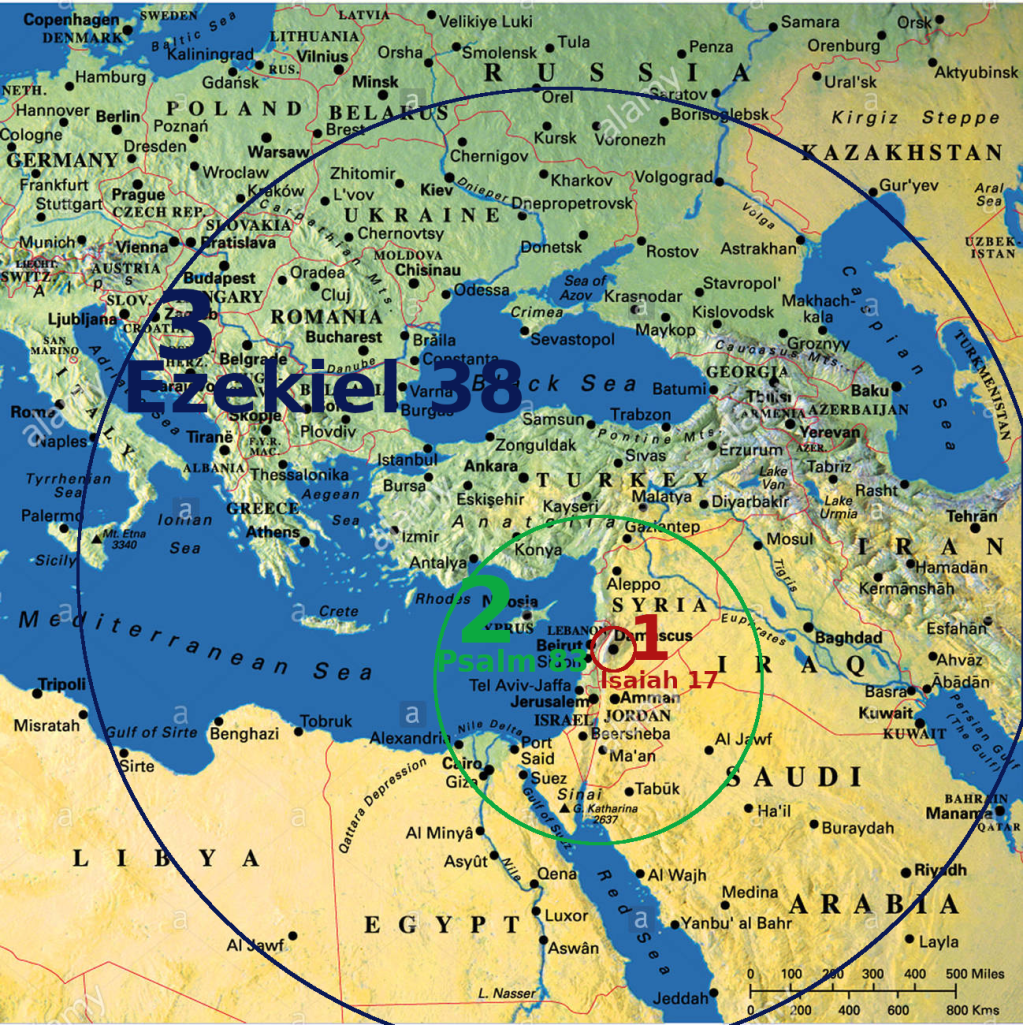
Psalm 83 is another imprecatory prayer, but also a prophetic one according to many commentators. Whether it only came true in the distant past, or perhaps the 6-Day War, or in more recent times, or is yet to be completely fulfilled, no one can say for sure.
Psalm 84 expresses longing to return to God’s sanctuary, but the idealistic language could also hint at how things will be in the future Millennial kingdom. Psalm 85 is a praise song for God’s deliverance after punishing his people, and Psalm 86 is a time when David is again pleading for deliverance. The commentary linked in the description includes a chart showing that many of the verses in this Psalm are also seen in others.
Psalm 87 is another song of praise about Zion, but Psalm 88 is the exact opposite: a lament without any mention of hope. Psalm 89 is back to praise, especially concerning the king of Israel, but at the end it returns to lament. Yet it includes a Messianic prophecy, since David’s dynasty was to last forever and it has been dormant for thousands of years now. That takes us to the end of Book 3.


 Bible U
Leave a comment